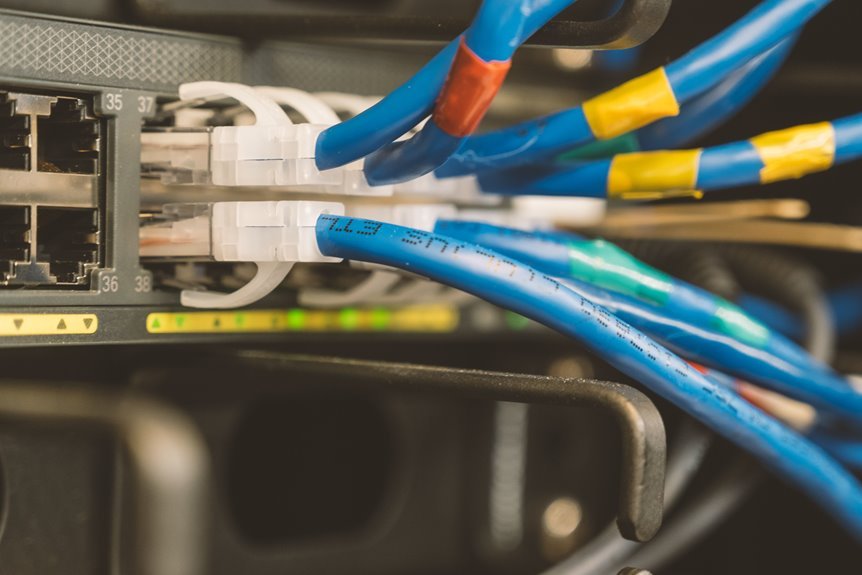
The discussion centers on how secure data transfers perform under real-world constraints. It weighs encryption overhead, protocol choices, and session key management against network variability such as bandwidth, RTT, and congestion. The aim is a precise, risk-aware assessment of throughput and latency, with practical optimizations that preserve cryptographic integrity. The outline suggests tangible metrics and governance controls to balance security with performance, leaving a key question unresolved and inviting further examination.
What Determines Secure Transfer Throughput and Latency
Several factors converge to shape secure transfer throughput and latency: encryption overhead, protocol choices, network conditions, and hardware capabilities. The assessment emphasizes cryptography agility and robust key management as core controls, guiding risk-aware decisions. Decisive trade-offs exist: stronger ciphers may slow paths; streamlined protocols reduce latency. Freedom-minded design seeks adaptive configurations, monitoring, and governance to maintain predictable performance without compromising security fundamentals.
How Encryption, Protocols, and Session Keys Impact Speed
How do encryption, protocol choices, and session keys collectively influence transfer speed? The evaluation centers on pipeline overheads and configurability. Encryption overhead drives CPU load and latency; protocol selection shapes handshake cadence; session key management affects renewal frequency and synchronization. Strategic emphasis on handshake optimization reduces round trips, while maintaining security guarantees, enabling efficient, freedom-respecting data movement without compromising risk controls.
Real-World Network Variability: Bandwidth, RTT, and Congestion Effects
Real-world networks exhibit variability that directly shapes secure data transfers, with bandwidth, round-trip time (RTT), and congestion forming the primary drivers of performance.
Throughput variability emerges as a core risk, demanding adaptive controls and clear thresholds.
Congestion signaling informs pacing decisions, shaping resilience without sacrificing security.
The balance hinges on measured vigilance, disciplined design, and strategic risk-aware tolerance for fluctuation.
Freedom-aware pragmatism sustains secure throughput.
Practical Optimizations: Balancing Security and Performance
As networks exhibit persistent variability in bandwidth, RTT, and congestion, practical optimizations seek to harmonize security objectives with measurable performance gains.
The analysis emphasizes data minimization, reducing exposure without compromising trust, and disciplined key rotation to sustain cryptographic freshness.
Decisions emphasize risk-aware tradeoffs, conservative pacing, and transparent metrics, enabling resilient, freedom-oriented deployments that balance protection with efficient, predictable transfer speeds.
Frequently Asked Questions
How Do Hardware Accelerators Affect Secure Transfer Latency?
Hardware accelerators reduce latency by offloading cryptographic tasks, but protocol overhead can dominate in some scenarios; new hardware must be evaluated with testing methodologies, considering power consumption and security trade-offs to preserve freedom and performance resilience.
What Is the Impact of Post-Quantum Algorithms on Throughput?
Ironically, post quantum algorithms may reduce cryptographic throughput, as enhanced security layers add latency; nevertheless, the audience seeking freedom weighs risk-aware trade-offs, balancing resilience and performance while pursuing scalable, resilient post quantum cryptographic throughput strategies.
Can Zero-Trust Posture Change Transfer Performance Metrics?
Zero trust can affect transfer performance by tightening controls; posture models influence latency and throughput. While security gains rise, network agility may dip. Strategic balancing minimizes risk, preserving freedom to innovate within risk-aware transfer practice.
Do Cloud-Based Encryption Services Introduce Additional Jitter?
Cloud-based encryption can introduce modest jitter concerns, but remains predictable with proper provisioning. The theory holds that latency variance may rise during CPU-bound tasks, yet strategic optimization and dedicated resources mitigate risks, preserving freedom to deploy securely.
How Do Legacy Protocols Influence Modern Secure Transfer Efficiency?
Legacy protocols hinder some efficiency in modern transfers, yet prudent organizations measure impact against modern benchmarks and adapt risk-aware strategies, balancing freedom with compliance, to optimize performance while preserving interoperability across evolving secure data channels.
Conclusion
In sum, secure transfer performance unfolds as a careful compromise among cryptographic rigor, protocol discipline, and network realities. Diligent pacing and prudent key management reduce incidental drag, while adaptive strategies soften variance without weakening resilience. By recognizing bandwidth, latency, and congestion as variables to be negotiated rather than barriers, organizations can sustain trust and momentum. The result is a measured, risk-aware balance: steady protection that respects pace, volatility, and the imperative to move data responsibly.