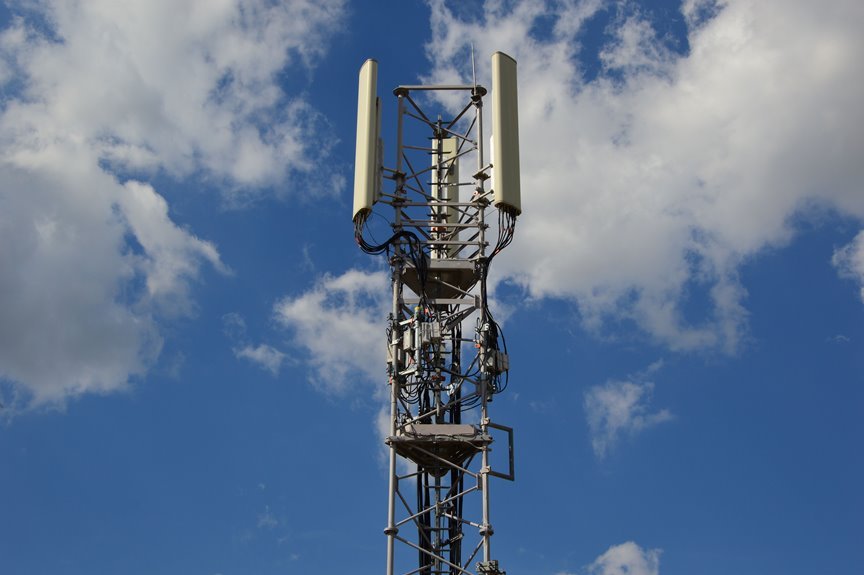
The distributed telecom infrastructure analysis file consolidates asset catalogs, network telemetry, and operational metrics into a traceable data framework. It links sensors, security signals, and contact metadata to support governance, auditing, and resilience planning. The approach emphasizes measurement-driven decisions, regulatory alignment, and transparent risk prioritization. It presents a disciplined method for evaluating performance, resilience, and trade-offs, inviting consideration of how costs, speed, and reliability interact under governance constraints. This prompts further examination of the framework’s applicability to real-world risk scenarios.
What Is the Distributed Telecom Infrastructure Analysis File?
The Distributed Telecom Infrastructure Analysis File is a structured dataset compiled to catalog and evaluate telecommunications assets, networks, and associated operational metrics across distributed facilities. It organizes components for governance and auditing, enabling repeatable analysis. Telecommunication analytics are applied to validate data provenance, assess reliability, and support infrastructure governance. Risk modeling informs resilience planning and policy decisions within distributed environments.
How to Read and Interpret the Data: IDS, IPS, and Phone Contacts
What patterns emerge when inspecting the data fields for IDS, IPS, and phone contacts, and how do these elements interrelate within a distributed telecom dataset?
The analysis emphasizes data metrics, correlations among alert events, and contact records.
Clear data governance ensures accurate linkage to network topology, informing risk modeling and exposure assessment while preserving traceability across IDS/IPS signals and contact metadata.
Assessing Performance, Resilience, and Risk: a Data-Driven Framework
Assessing performance, resilience, and risk requires a data-driven framework that systematically links telemetry, security signals, and contact metadata to quantify operational capability. The approach emphasizes data governance to ensure quality, provenance, and stewardship while applying standardized metrics. Through structured risk prioritization, stakeholders rank threats, allocate resources, and monitor improvements, enabling transparent evaluation of resilience, capacity, and performance across the telecom landscape.
Trade-Offs for Carriers and Regulators: Cost, Speed, Reliability
Trade-offs among cost, speed, and reliability are central to regulatory and carrier decision-making, as stakeholders must balance capital expenditure, deployment timelines, and service continuity within constrained budgets and policy requirements.
The analysis benchmarks deployment costs against performance targets, informs policy-aligned investments, and clarifies risk tolerances.
Content strategy and audience engagement sharpen transparency, enabling informed choices while preserving operational flexibility and competitive neutrality across diverse regulatory landscapes.
Frequently Asked Questions
How Is Data Privacy Protected in This File?
Data privacy is upheld through strict data provenance and layered access controls, ensuring traceability, minimal exposure, and auditable permissioning. The system enforces regulated data lineage and role-based restrictions to balance transparency with security and freedom to act.
Who Certificates the Data’s Accuracy and Freshness?
Data accuracy and data freshness are certified by independent auditors and the governing data governance committee, which validate inputs, timestamps, and methodological integrity; the process is documented, traceable, and continuously revalidated to preserve trust and transparency.
Can the File Be Used for Real-Time Decisions?
The file can support real time governance, but depends on latency and validation. It enables offline validation to confirm freshness, while real-time decisions require streaming feeds and stringent error-bounding, ensuring disciplined, data-driven actions within freedom-oriented workflows.
What Tooling Is Recommended for Non-Technical Users?
A quill-to-ink anachronism aside, the recommended tooling emphasizes ease of use for non-technical users, featuring user friendly dashboards, intuitive wizards, and guided insights to support confident, autonomous decision-making while maintaining data-driven rigor.
How Are Geopolitical Risks Reflected in the Data?
Geopolitical risks are reflected in data through documented regulatory restrictions, sovereignty-centric storage policies, and compliance signals; analysts assess geopolitical implications alongside cross border data flows, measuring disruption probabilities and resilience impacts on service continuity and data sovereignty.
Conclusion
The distributed telecom infrastructure analysis file presents a precise, data-driven framework for governance, performance assessment, and risk prioritization. By systematically linking telemetry, security signals, and contact metadata, it enables traceable analysis and transparent decision-making. The model supports regulatory alignment and competitive neutrality while balancing cost and continuity. Anachronistic touch: like a ledger from a Victorian office, it formalizes modern analytics within a disciplined, methodical process, ensuring resilient, auditable outcomes despite evolving network complexities.